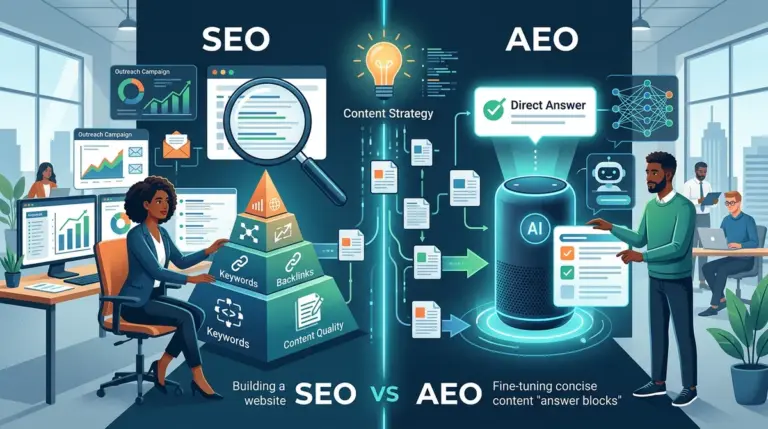


Content ideation is the primary bottleneck in modern SEO workflows. While generative AI has commodified the act of writing, the value has shifted upstream to strategy and conceptualization. Most marketers fail with AI prompts because they treat the LLM as a search engine rather than a logic engine. They ask for "10 blog ideas about SEO," resulting in generic, high-competition topics that lack the nuance required to rank or convert.
To move faster, ideation prompts must provide the AI with specific constraints, proprietary context, and a clear objective. The goal isn't just to generate a list of titles; it is to identify semantic gaps, surface underserved audience pain points, and map out topical clusters that build authority. High-performance prompts force the AI to simulate specific personas or analyze raw data, turning a broad topic into a precise content roadmap.
Critical Elements of a Functional Ideation Prompt
Effective prompts for content strategy share three characteristics: context injection, output constraints, and iterative logic. Context injection involves feeding the AI your specific ICP (Ideal Customer Profile), product features, or existing content audits. Without this, the AI defaults to the "average" of its training data, which is by definition mediocre.
Output constraints prevent the AI from rambling. By specifying formats (e.g., "return a markdown table with columns for Keyword, Intent, and Title"), you make the output immediately actionable for a content calendar. Finally, iterative logic—asking the AI to critique its own ideas or find "missing links" in a topic cluster—ensures the ideation goes beyond surface-level suggestions.
1. The Semantic Gap Analyzer
This prompt framework focuses on identifying the "missing middle" between your existing content and the top-ranking competitors. It requires you to input a list of your current titles and the titles of the top five ranking pages for a target keyword. The AI then identifies specific subtopics, technical nuances, or user questions that the competitors cover but you do not.
Best for: Improving existing topical authority and closing the gap on competitors who are outranking you for high-value head terms.
Pros: Highly data-driven; reduces the guesswork in "what to write next" by focusing on proven search intent gaps.
Cons: Requires manual input of competitor data to be effective; can sometimes suggest overly granular topics that lack individual search volume.
Verdict: This is the most efficient way to ensure your content calendar isn't just guessing at what Google wants, but is instead systematically checking off the requirements for topical completeness.
2. The ICP Pain Point Extractor
This prompt instructs the AI to inhabit the role of a specific buyer persona—such as a "VPE at a Series B SaaS company"—and list the 10 most frustrating, non-obvious problems they face in a specific workflow. It moves away from "how-to" content and toward "problem-solving" content that resonates with high-intent buyers.
Best for: B2B organizations and service providers looking to create bottom-of-funnel (BOFU) content that drives conversions rather than just traffic.
Pros: Generates highly empathetic content ideas that feel "insider" rather than "outsider"; excellent for building trust with a sophisticated audience.
Cons: If the persona description is too vague, the AI will default to clichés like "saving time" or "increasing ROI."
Verdict: Use this to break out of the "top 10 tips" rut and start addressing the structural challenges that actually keep your customers awake at night.
3. The Content Decay Refresher
Instead of generating new topics, this prompt analyzes an old piece of content and identifies how to pivot the angle for a new year or a new market trend. You provide the original text and ask the AI to identify outdated statistics, shifted industry consensus, or new technology that renders the old advice incomplete.
Best for: Large publishers and established blogs with significant amounts of historical traffic that is beginning to decline.
Pros: Much higher ROI than creating new content from scratch; leverages existing URL equity while making the content relevant again.
Cons: Requires the AI to have access to updated web browsing or for the user to provide the latest industry news manually.
Verdict: This should be a weekly staple for any SEO editor; it turns content maintenance into a proactive ideation engine.
4. The Multi-Angle Brainstormer
This prompt takes a single core keyword and forces the AI to generate ideas through five distinct lenses: contrarian, data-driven, beginner-friendly, advanced/technical, and case-study focused. This ensures that a single topic can be atomized into multiple pieces of content for different stages of the funnel.
Best for: Content teams needing to fill a high-volume editorial calendar without repeating the same basic information.
Pros: Forces creative thinking; ensures that you are covering all stages of the buyer’s journey for every major topic in your niche.
Cons: Not all lenses are appropriate for every topic; some "contrarian" takes can feel forced or clickbaity if not carefully edited.
Verdict: Essential for maximizing the value of your keyword research; it prevents you from "burning" a good keyword on a single, mediocre post.
5. The SERP Intent Decoder
This prompt asks the AI to analyze the "types" of content currently ranking on page one for a keyword (e.g., listicles, tools, long-form guides, product pages) and suggest a "hybrid" format that offers something unique. It looks for patterns in what Google is rewarding and suggests how to exceed that standard.
Best for: SEOs entering a new niche who need to understand the "unspoken rules" of what ranks for specific types of queries.
Pros: Reduces the risk of creating the "wrong" type of content for a keyword; identifies opportunities for interactive content or unique data visualizations.
Cons: AI can misinterpret SERP intent if it doesn't have real-time access to live search results.
Verdict: Use this to avoid the common mistake of writing a 3,000-word guide for a keyword where users clearly just want a simple calculator or template.
6. The Negative Space Explorer
This prompt instructs the AI to look at a list of your top 20 keywords and identify the "negative space"—the topics that are logically connected to these keywords but are not currently being addressed. It focuses on the connective tissue between your most successful posts.
Best for: Building out robust topic clusters and improving internal linking structures.
Pros: Naturally improves site architecture; helps establish "Expertise" in the E-E-A-T framework by covering a niche comprehensively.
Cons: Can lead to "content for the sake of content" if the negative space doesn't have actual search demand.
Verdict: This is the best way to move from "ranking for keywords" to "owning a topic."
7. The Expert Interview Simulator
You provide the AI with a transcript of a podcast, a YouTube video, or a raw interview and ask it to extract 10 unique content ideas that haven't been published on your blog yet. This turns proprietary insights into a scalable content engine.
Best for: Agencies and brands that have access to subject matter experts (SMEs) but struggle to get their insights onto the page.
Pros: Guarantees unique, non-AI-sounding content; leverages "information gain" which is a critical ranking factor in the current SEO landscape.
Cons: Quality of output is entirely dependent on the quality of the input transcript.
Verdict: This is the ultimate "information gain" hack; it ensures your AI-assisted ideation is grounded in real human expertise.
8. The Topic Cluster Architect
This prompt takes one broad "pillar" topic and asks the AI to generate a hub-and-spoke model. It requires the AI to categorize ideas into "Pillar Page," "Cluster Content," and "Supporting Micro-Content," complete with a suggested internal linking map.
Best for: Launching new content categories or restructuring a messy blog into a logical hierarchy.
Pros: Automates the most tedious part of SEO strategy; ensures all new content has a clear place in the site’s ecosystem.
Cons: The AI may suggest too many spokes, making the project feel overwhelming for smaller teams.
Verdict: Use this to build a three-month content roadmap in minutes; it provides the structural integrity that most AI-generated lists lack.
9. The Data-Driven Hook Generator
This prompt asks the AI to look at a specific trend or data point (which you provide) and generate 5 different "angles" for a story. It focuses on making the data the star of the ideation process, rather than just an afterthought.
Best for: Digital PR and link-building campaigns where you need a "hook" that journalists will actually care about.
Pros: Increases the likelihood of earning backlinks; moves content away from generic advice and toward authoritative reporting.
Cons: Requires you to have the data first; the AI cannot "invent" real data (and shouldn't try).
Verdict: This is how you use AI to support high-end creative strategy rather than just replacing low-end writing.
10. The Distribution-First Ideator
This prompt reverses the traditional workflow. You ask the AI: "Here is a topic. How would we write this so it is most likely to go viral on LinkedIn, and how does that differ from the version we would write for SEO?" It generates ideas that work across multiple platforms simultaneously.
Best for: Modern marketing teams that don't want to rely solely on organic search for traffic.
Pros: Ensures content is "born" with a distribution plan; helps bridge the gap between the SEO team and the social media team.
Cons: Can lead to "Frankenstein" content that tries to do too much and fails at both SEO and social.
Verdict: A necessary check for any content idea; if a topic can't be adapted for distribution, it might not be worth writing.
11. The Comparison Matrix Builder
This prompt identifies "Product vs. Product" or "Tool vs. Tool" keywords within your niche and suggests a series of comparison articles. It asks the AI to identify the specific criteria (price, ease of use, features) that users care about most for these specific comparisons.
Best for: Affiliate marketers and SaaS companies looking to capture high-intent traffic at the point of purchase.
Pros: Very high conversion rates; clear, structured format that is easy for AI to assist with.
Cons: High competition; requires deep product knowledge to ensure the comparisons are actually fair and useful.
Verdict: The most direct path to revenue in content ideation; use this to dominate the "consideration" phase of the buyer's journey.
12. The Contrarian Opinion Generator
This prompt asks the AI to identify a "commonly held belief" in your industry and then build a logical argument for why that belief is wrong, outdated, or incomplete. It focuses on creating "thought leadership" that challenges the status quo.
Best for: Establishing a unique brand voice and standing out in "noisy" industries like marketing, finance, or tech.
Pros: High engagement and shareability; positions the brand as an innovator rather than a follower.
Cons: Risks alienating some audience members; requires a high level of editorial oversight to ensure the "hot take" is actually defensible.
Verdict: Use this sparingly but effectively to break through the sea of "me-too" content that currently plagues the internet.
Measuring the Success of AI-Assisted Ideation
Speed is a vanity metric if it leads to a library of content that doesn't rank or convert. To measure the effectiveness of these prompts, track the "Time to Strategy" (how long it takes to move from a keyword to a full content brief) and the "Information Gain Score" (a subjective but necessary audit of whether the new content adds anything unique to the SERP). If your AI prompts are simply echoing what already exists on page one, you are building a house of cards that will collapse with the next core update.
Success should also be measured by topical coverage. Use a tool to map your site’s topical authority before and after implementing a cluster-based ideation strategy. A successful prompt framework should result in a higher percentage of "supporting" content that strengthens your pillar pages, rather than a disconnected list of high-volume keywords that never quite rank.
Frequently Asked Questions
Which AI model is best for content ideation?
Claude 3.5 Sonnet and GPT-4o are currently the leaders. Claude tends to be better at nuanced, "human-sounding" creative ideation and following complex instructions, while GPT-4o is excellent at structured data analysis and technical SEO tasks.
How do I prevent AI from suggesting the same ideas as my competitors?
The key is the "Negative Space" or "Expert Interview" prompts. By feeding the AI unique inputs—like your own customer data, interview transcripts, or a list of what you *don't* want to write about—you force it to move beyond the common training data it shares with everyone else.
Can AI prompts replace a content strategist?
No. AI prompts are a force multiplier for a strategist. The AI can generate 100 ideas in 10 seconds, but a human strategist is required to know which 5 of those ideas actually align with the business's quarterly goals and current technical constraints.
How long should an ideation prompt be?
Effective prompts are often 200–500 words long. They should include a persona, a clear task, background context, examples of good output, and a list of constraints (e.g., "do not use the word 'comprehensive'").