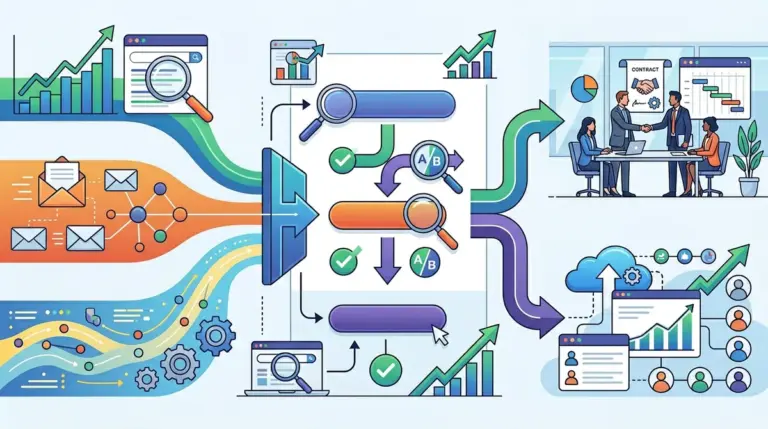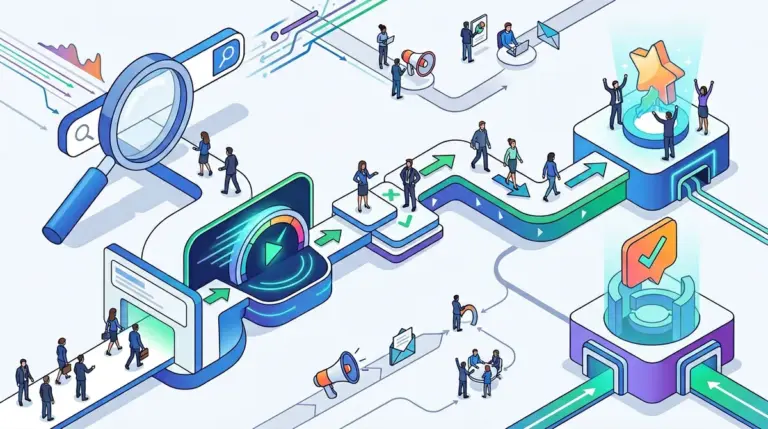


The conflict between SEO and conversion rate optimization (CRO) is a structural tension that most marketers fail to resolve. SEO requires semantic depth, keyword density, and internal linking structures that often clutter a page. CRO demands minimalism, a singular focus, and the removal of exit points. When you build a landing page, you are deciding whether to prioritize the algorithm’s need for context or the human’s need for clarity. The most profitable pages do not choose; they use a hybrid architecture that satisfies Google’s helpful content requirements while maintaining a frictionless path to the call to action (CTA). A successful landing page strategy requires balancing SEO and CRO goals to meet both user needs and search engine demands.
Mapping Keywords to Commercial Intent
The primary reason landing pages fail to rank is a mismatch between the keyword’s intent and the page’s utility. If a user searches for "how to distribute content," they are looking for an educational guide. If they search for "content distribution services," they are looking for a vendor. Attempting to rank a transactional landing page for informational keywords results in high bounce rates and declining SERP positions.
Best for: High-intent commercial keywords where the user is ready to compare features, pricing, or service models.
To capture organic traffic, your landing page must address the secondary questions associated with the primary keyword. Use tools to identify "People Also Ask" (PAA) clusters and integrate these as H3 subheadings. This creates a "long-form landing page" that provides enough value to satisfy Google’s E-E-A-T (Experience, Expertise, Authoritativeness, and Trustworthiness) criteria without distracting the user from the primary conversion goal.
The Technical Architecture of High-Ranking Pages
Speed is a direct ranking factor and a primary conversion killer. According to data from various infrastructure providers, a one-second delay in mobile load times can impact conversion rates by up to 20%. For a landing page to rank, it must pass Core Web Vitals, specifically Largest Contentful Paint (LCP) and Cumulative Layout Shift (CLS).
- Image Optimization: Use WebP formats and explicit width/height attributes to prevent layout shifts.
- Critical CSS: Inline the CSS required for above-the-fold content to ensure the user sees the hero section instantly.
- Schema Markup: Implement Product or Service schema to enable rich snippets in search results, increasing your click-through rate (CTR) even if you aren't in the top position.
Structural Hierarchy: Balancing Copy and Code
A landing page must be scannable for both bots and humans. Use a logical H-tag hierarchy that follows a narrative flow. Your H2s should not just be keyword-stuffed phrases; they should be benefit-driven statements that include your primary or secondary keywords. This signals to search engines what the section is about while moving the user through the sales funnel.
For pages requiring significant text to rank for competitive terms, use "progressive disclosure" techniques. This involves using accordions or "read more" toggles for technical specifications or deep-dive FAQs. This keeps the primary UI clean for the user while ensuring the search engine crawler can still index the full body of text.
Warning: Avoid using "Noindex" tags on landing pages you intend to rank organically. Many PPC-focused agencies default to noindexing landing pages to prevent "cannibalization," but this effectively kills any chance of capturing zero-cost organic leads. Only noindex if the page is a near-duplicate of another live URL.
Content Distribution and External Authority
A landing page cannot rank on technical merit alone, especially in competitive niches like SaaS or professional services. It requires external signals. Most marketers make the mistake of building links only to their homepage or blog posts, leaving their high-value landing pages as "orphaned" islands with no backlink equity. To combat this, focus on building high-converting landing pages that attract relevant backlinks and improve their visibility.
To rank a landing page, you must treat it as a resource. This involves:
1. Internal Linking: Link to your landing page from high-traffic blog posts using exact-match or partial-match anchor text.
2. Niche Citations: Submit the page to relevant industry directories and resource lists.
3. Press and Outreach: Use distribution services to get your landing page mentioned in industry news or guest columns. This provides the "referral traffic" and "authority" signals that Google uses to validate the page's importance.
Conversion Elements That Don't Hurt SEO
The goal of the page is the conversion. However, heavy scripts for pop-ups, chatbots, and heatmaps can degrade performance. Use asynchronous loading for third-party scripts so they don't block the main thread of the page. Place your primary CTA above the fold, but repeat it at the end of every major thematic section. This ensures that as the user scrolls through the "SEO content," they are never more than one flick of the thumb away from the conversion point.
The Implementation Checklist
To ensure your page is optimized for both discovery and action, follow this deployment sequence:
Phase 1: Research. Identify a commercial keyword with a monthly volume that justifies the build. Map out 3-5 sub-questions the user has before buying.
Phase 2: Build. Use a clean HTML structure. Ensure the H2s reflect the user's pain points. Keep the hero section focused on a single USP (Unique Selling Proposition).
Phase 3: Optimize. Compress all assets. Add Service schema. Ensure the mobile view doesn't hide the CTA button.
Phase 4: Distribute. Build 3-5 high-quality external links directly to the landing page. Monitor the search console for impressions on secondary keywords and adjust copy to match the terms Google is actually surfacing you for.
Frequently Asked Questions
How long should a landing page be for SEO?
There is no fixed word count, but competitive commercial pages usually require 600 to 1,200 words to provide enough semantic context for Google. If the competition is ranking with 2,000-word guides, you will likely need more depth to compete.
Can I use the same landing page for PPC and SEO?
Yes, but with caution. PPC pages often benefit from shorter copy and fewer links. For a hybrid page, ensure the top of the page is optimized for the PPC user (fast, clear CTA), while the bottom of the page contains the detailed content needed for SEO.
Why is my landing page indexed but not ranking?
This is usually due to a lack of "Page Authority" or poor internal linking. If your site’s homepage is strong but your landing page is weak, you need to pass more equity to that specific URL through internal links and external distribution.