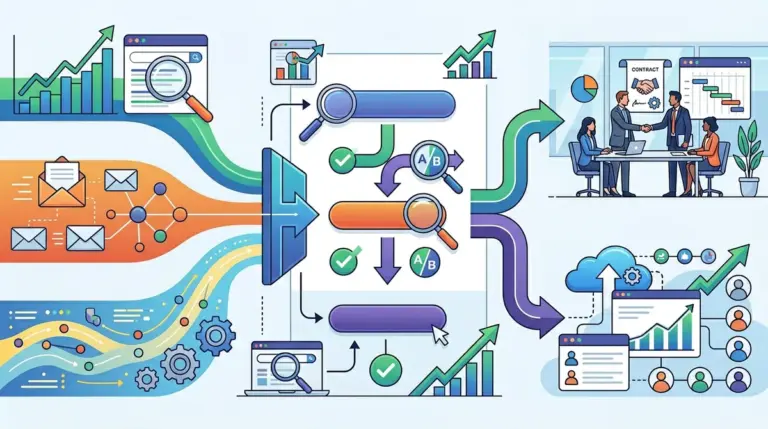


High traffic figures look impressive in a monthly report, but they are a vanity metric if they do not correlate with revenue growth. Many SEO strategies fail because they prioritize volume over velocity—the speed at which a user moves from a search result to a conversion. Aligning SEO traffic with conversion intent requires a shift from broad keyword targeting to a granular understanding of the user’s psychological state at the moment of the query.
If your site attracts thousands of visitors for "how-to" guides but fails to convert them into trial signups or purchasers, you are likely suffering from an intent mismatch. This occurs when the content satisfies a user’s curiosity but provides no logical bridge to your product or service. To fix this, you must audit your keyword portfolio and restructure your content to serve as a high-friction filter, attracting only those ready to take action.
Auditing the Intent-Conversion Gap
Before targeting new keywords, analyze your existing top-performing pages. Use your analytics platform to cross-reference organic landing pages with conversion goals. If a page has a high bounce rate and zero conversions despite ranking in the top three positions, the intent is likely purely informational. The user wants a quick answer, not a solution they have to pay for.
Identifying Low-Value Traffic Spikes
Informational keywords like "what is [industry term]" or "history of [process]" are useful for brand awareness but rarely drive immediate sales. These users are in the "unaware" or "problem-aware" phase. To drive conversions, you need to pivot toward "solution-aware" and "product-aware" queries. Look for keywords that include modifiers such as:
- Commercial: "Best," "Top-rated," "Comparison," "Review."
- Transactional: "Pricing," "Buy," "Discount," "Trial," "Hire."
- Navigational: "[Brand Name] features," "[Brand Name] vs [Competitor]."
Mapping Keywords to the Buyer’s Journey
Effective SEO alignment treats the search engine results page (SERP) as a map of user psychology. When a user searches for "automated directory submission," they are looking for a tool to solve a specific problem. When they search for "SEO tips for beginners," they are looking for education. You cannot force a "buy now" button on an educational searcher and expect a high conversion rate.
Best for: Agencies and SaaS companies looking to lower their Customer Acquisition Cost (CAC) by focusing on high-intent long-tail keywords rather than high-volume head terms.
Commercial Intent Signals in SERPs
Look at the SERP features for your target keywords. If the page is dominated by Shopping ads and "People Also Ask" boxes focused on pricing, Google has identified the intent as transactional. If the SERP is mostly Wikipedia entries and long-form blog posts, the intent is informational. Align your content format with these signals. Do not try to rank a product page for a keyword that Google clearly views as an informational topic.
Pro Tip: Use "VS" keywords to capture users at the bottom of the funnel. When a user searches for "Competitor A vs Competitor B," they have already decided to buy; they are simply deciding who to give their money to. Creating a comparison page that includes your own service as the third, superior option is one of the highest-converting SEO tactics available.
Engineering Content for Transactional Momentum
Once you have identified the right keywords, the content itself must be engineered to move the user toward a conversion. This is where most SEO copy falls short by being too passive. Every piece of content should have a "Next Logical Step."
If the user is reading about "how to improve local SEO visibility," the next logical step isn't just "contact us." It is "Download our local SEO checklist" or "See how our automated submission tool handles this for you." You are providing a tool that solves the problem they just finished reading about. This creates a seamless transition from information to utility.
For TLSubmit users, this means focusing outreach and distribution efforts on platforms where SEO professionals are actively seeking workflow efficiencies. When you distribute content through high-authority directories and niche-specific platforms, you aren't just building links; you are placing your solution in the path of a user who is already looking for a way to streamline their manual tasks.
Strategic Distribution and Link Placement
Alignment doesn't end with on-page SEO. Your backlink profile and distribution strategy must also reflect conversion intent. Getting a link from a generic news site might help your domain authority, but a link from a "Top SEO Tools for 2024" listicle will drive actual buyers.
Workflow Integration:
Direct your outreach toward resource pages, tool directories, and industry-specific aggregators. These sites are visited by users in a "research and buy" mindset. A link from a relevant directory acts as a third-party endorsement, pre-qualifying the traffic before they even land on your site. This is why automated distribution to high-quality directories is a staple for agencies that need to show ROI quickly.
Refining the Funnel Through Data
To maintain alignment, you must treat SEO as an iterative process. Monitor your Search Console data for "impressions without clicks" and "clicks without conversions."
- High Impressions/Low Clicks: Your meta title and description do not match the user's intent or are not compelling enough.
- High Clicks/Low Conversions: Your landing page is failing to deliver on the promise made in the search snippet, or the intent of the keyword is too far removed from your offer.
Adjust your CTAs based on the depth of the page. A user on a high-level guide might respond better to a newsletter signup, while a user on a "pricing" or "features" page should be pushed directly to a demo or checkout page.
Immediate Steps to Synchronize Traffic and Sales
Start by identifying your ten highest-traffic pages. If their conversion rate is below your site average, rewrite the introductions to address the user's pain point immediately and introduce your product as the solution within the first 300 words. Next, shift your keyword research focus away from volume and toward "difficulty vs. intent." A keyword with 100 monthly searches and high commercial intent is worth more than a keyword with 10,000 searches and no clear path to a sale.
Finally, automate the distribution of your high-intent pages. Use directory submissions and targeted outreach to ensure that your "money pages" are getting the external signals they need to rank where buyers are looking. SEO is not about being found by everyone; it is about being found by the right person at the exact moment they are ready to solve a problem.
Frequently Asked Questions
How do I know if a keyword has commercial intent?
Check the Cost-Per-Click (CPC) in Google Ads. If advertisers are willing to pay a high price for a click on that keyword, it is because that traffic converts. Additionally, look for "Shopping" results or "Sponsored" labels on the SERP.
Can informational traffic ever lead to conversions?
Yes, but the sales cycle is much longer. Informational traffic is best for building an email list or retargeting audiences. It rarely results in a "first-touch" conversion. Use it to fill the top of your funnel, but do not rely on it for immediate revenue.
Why is my high-ranking page not generating leads?
The most common reason is "informational satisfaction." If your content answers the user's question so completely that they have no reason to click further or investigate your services, you have satisfied their intent but failed your business goal. Always leave a "gap" that only your product or service can fill.
Should I delete pages that bring traffic but no conversions?
Not necessarily. These pages contribute to your site’s overall topical authority. Instead of deleting them, try to "bridge" them to transactional pages via internal linking or update the CTAs to offer a low-friction lead magnet like a PDF guide or a webinar.