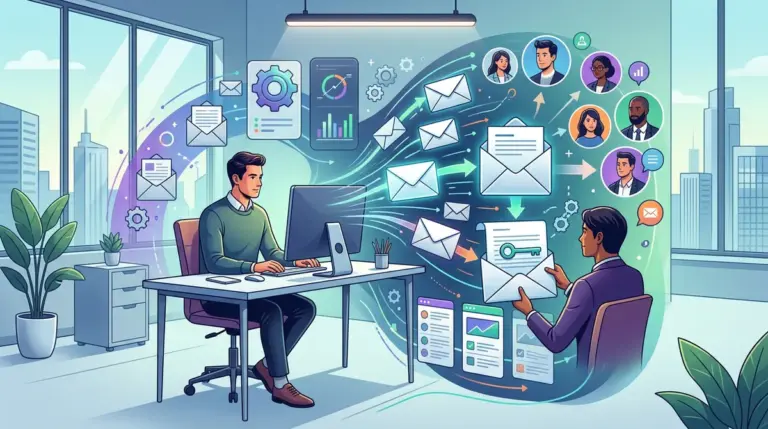

Customer acquisition costs are rising across every paid channel, making the "one-and-done" sale a recipe for negative margins. For brands looking to stabilize revenue, email marketing is not a secondary task; it is the primary engine for retention. Unlike social media or search, email is a direct line to an audience you own, shielded from the volatility of third-party algorithm shifts. To move beyond basic newsletters and into high-retention territory, brands must treat email as a technical distribution system that prioritizes relevance over frequency.
Establishing Deliverability Through Technical Compliance
Before a single word of copy is written, the technical infrastructure must be sound. Since the February 2024 updates from Gmail and Yahoo, deliverability is no longer a "nice to have" but a strict requirement for senders. Brands failing to meet these standards risk having their entire domain blacklisted, which impacts not just marketing emails but corporate communications as well.
- SPF (Sender Policy Framework): A DNS record that specifies which mail servers are authorized to send email on behalf of your domain.
- DKIM (DomainKeys Identified Mail): An encrypted signature that verifies the email was indeed sent by the domain owner and wasn't intercepted or changed.
- DMARC (Domain-based Message Authentication, Reporting, and Conformance): A policy that tells receiving servers what to do if an email fails SPF or DKIM checks. Setting this to "p=quarantine" or "p=reject" is the current industry standard for security.
Best for: Ensuring that high-value retention content actually reaches the primary inbox rather than the spam folder or the promotions tab.
Segmenting by Lifecycle Stage Over Demographics
Generic blasts are the fastest way to increase unsubscribe rates. Retention-focused brands segment their lists based on behavioral data—what a user did or did not do—rather than static demographics like age or location. Behavioral segmentation allows for "right-time" messaging that feels like a service rather than an intrusion. Retention-focused brands segment their lists based on behavioral data, which allows for tailored messaging that resonates deeply with individual customer journeys.
A high-retention strategy categorizes users into three distinct buckets: New Leads (non-buyers), Active Customers (recent buyers), and At-Risk Customers (those nearing the end of their typical purchase cycle). By tailoring the message to these stages, you avoid the friction of sending a 20% discount code to someone who just paid full price yesterday, a common mistake that erodes brand trust.
Pro Tip: Monitor your "Sunset Policy" aggressively. If a subscriber has not opened or clicked an email in 90 to 120 days, move them to a re-engagement flow or remove them entirely. High unengaged rates signal to ISPs that your content is low quality, which drags down deliverability for your most active buyers.
The Three Non-Negotiable Retention Flows
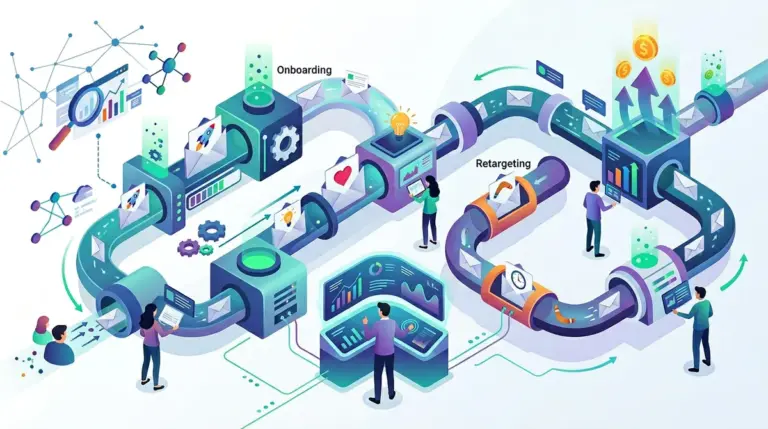
Automation is the backbone of retention because it captures intent in real-time. While newsletters provide ongoing brand presence, automated flows respond to specific triggers, resulting in significantly higher revenue per recipient.
The Post-Purchase Education Sequence
The period immediately following a purchase is the "honeymoon phase." Instead of immediately pushing for a second sale, use this sequence to reduce buyer’s remorse and increase the product's perceived value. If you sell software, this is your onboarding; if you sell physical goods, this is your "how to use/style/maintain" guide. Educated customers are less likely to churn and more likely to leave positive reviews, which fuels your SEO and social proof efforts.
The Browse Abandonment Flow
Abandoned cart emails are standard, but browse abandonment targets users higher up the funnel. If a logged-in user views a specific category or product three times without adding it to their cart, an automated email can trigger with helpful information or a comparison guide. This is a distribution play: you are pushing relevant content to a user who has shown specific interest, reducing the friction of their decision-making process.
The Win-Back or Re-Engagement Flow
It is five to seven times cheaper to retain an existing customer than to acquire a new one. A win-back flow triggers when a customer exceeds their "Expected Next Purchase Date." For a supplement brand, this might be 30 days; for a luxury apparel brand, it might be six months. The goal is to remind the user of the value they previously received, often accompanied by a "we miss you" incentive to bridge the gap back to active status.
Merging SEO and Email for Distribution Efficiency
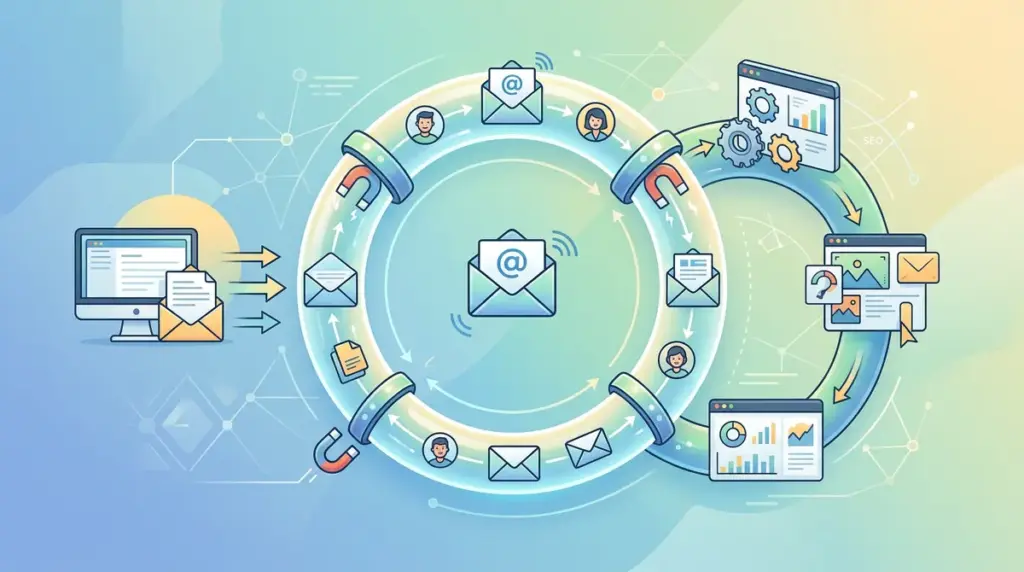
Email should not exist in a vacuum. It is one of the most effective distribution channels for your SEO-driven content. When you publish a high-value guide, whitepaper, or case study, your email list is the first place it should go. This creates a virtuous cycle: your email list gets valuable, non-salesy content that keeps them engaged, and your website receives a spike in high-intent traffic, which signals relevance to search engines.
Practical Workflow: Take a high-performing blog post, extract the three most actionable "takeaways," and format them as a plain-text email. Link back to the full post for those who want the deep dive. This respects the user's time while driving traffic to your most important digital assets.
Metrics That Dictate Strategy Adjustments
Stop focusing on Open Rates as your primary KPI. With the advent of Apple’s Mail Privacy Protection (MPP), open rates are often inflated and unreliable. Instead, focus on these three metrics to gauge retention health:
Click-to-Open Rate (CTOR): This measures the effectiveness of your content. Of the people who opened the email, how many found the content compelling enough to click? A low CTOR suggests a mismatch between your subject line and the actual body copy.
Revenue Per Recipient (RPR): This is the ultimate equalizer. It tells you exactly how much each person on your list is worth. If your RPR is dropping while your list size is growing, your "growth" is likely coming from low-quality leads that will never convert into repeat buyers.
Unsubscribe Rate per Campaign: While some churn is natural, a spike in unsubscribes usually indicates that a specific segment is being over-messaged or that the content has veered too far away from the initial opt-in promise.
Auditing Your Current Retention Engine
To improve retention, start with a cold audit of your current output. Sign up for your own list using a personal email and track the experience. Are you being bombarded with "Buy Now" prompts within minutes of joining? Is the formatting broken on mobile? Is the content actually useful, or is it just filler? Fix the technical leaks in your deliverability first, then move to behavioral segmentation, and finally, align your email output with your broader content distribution goals. Retention is not about the "perfect" subject line; it is about being the most relevant inbox they open all day.
Frequently Asked Questions
How often should I email my list for maximum retention?
Consistency beats frequency. For most brands, two to three times per week is the sweet spot. However, the "right" frequency is determined by your audience's expectations. If you promised a daily tip, send daily. If you promised a monthly digest, stick to that. Sudden spikes in volume are what trigger spam filters.
What is the best way to grow a high-retention email list?
Avoid "spin-to-win" wheels that attract discount-seekers who will never buy at full price. Instead, use high-value lead magnets—like checklists, templates, or exclusive data—that solve a specific problem related to your product. This ensures the people joining your list are actually interested in your expertise, not just a one-time coupon.
Do plain-text emails work better than designed HTML templates?
It depends on the context. For personal outreach, "founder notes," or educational content, plain text often sees higher engagement because it feels like a 1-to-1 communication. For product showcases and e-commerce promotions, well-designed HTML templates are necessary to show the visual value of the goods. A healthy mix of both is usually the most effective approach.