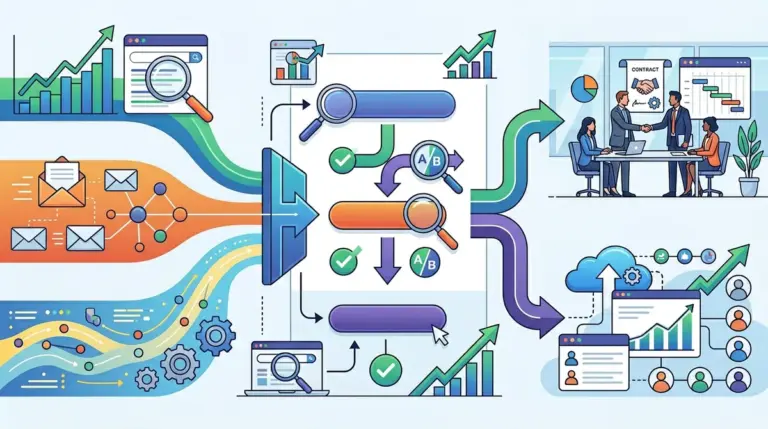

Landing pages are often the most expensive real estate on a website, whether measured by the cost-per-click of a Google Ads campaign or the months of editorial effort required to rank for a high-volume organic keyword. The fundamental challenge lies in the conflicting needs of these two traffic sources. Paid traffic demands immediate relevance and a singular path to conversion, while organic traffic requires depth, context, and structural signals to satisfy search engine algorithms. Building a page that serves both requires a calculated balance of technical SEO and aggressive conversion rate optimization (CRO). Building a page that serves both requires a calculated balance of technical SEO and aggressive conversion rate optimization to ensure you are aligning SEO traffic with conversion intent.
Aligning Page Intent with Traffic Source Requirements
A landing page designed for organic search must provide enough value to satisfy a user’s informational or commercial intent. If a user clicks an organic result for "enterprise CRM comparison," they expect a detailed breakdown. If they click a paid ad for the same term, they are often further down the funnel and ready for a demo. To bridge this gap, high-performing pages utilize a modular design.
Paid Traffic Focus: For PPC, the "Message Match" is the primary driver of Quality Score and conversion. If the ad promises a "Free SEO Audit," the landing page must feature that offer above the fold without requiring the user to scroll. The primary goal is to minimize friction and prevent "pogo-sticking" back to the search results.
Organic Traffic Focus: Search engines prioritize pages with topical authority. This means your landing page needs more than just a headline and a form. It requires structured data, relevant subheadings (H2s and H3s), and sufficient word count to prove to crawlers that the page is a definitive resource for the target query.
The Anatomy of a Hybrid High-Conversion Layout
To convert both types of visitors, the layout must be hierarchical. The top of the page serves the immediate needs of paid visitors, while the middle and bottom provide the depth required for SEO and skeptical organic researchers.
- The Hero Section: This must contain a benefit-driven headline (not a feature-driven one), a supporting sub-headline that clarifies the value proposition, and a clear Call to Action (CTA). For hybrid pages, keep the CTA "above the fold" to capture high-intent paid clicks immediately.
- Social Proof and Trust Signals: Generic testimonials are less effective than specific data points. Use recognizable logos, verified review counts (e.g., G2 or Trustpilot), and specific case study results. "Increased revenue by 40%" carries more weight than "Great service."
- The "Why Us" Grid: Use a three- or four-column layout to highlight specific differentiators. This is an excellent place to insert secondary keywords for SEO while maintaining a clean UI for visitors.
- Frictionless Lead Capture: Every field added to a form decreases conversion rates. Only ask for what is strictly necessary for the initial follow-up. Use multi-step forms if you need extensive data, as they often convert better by leveraging the principle of commitment and consistency.
Pro Tip: If you are running aggressive PPC campaigns alongside SEO efforts, use Dynamic Keyword Insertion (DKI) for your paid traffic. This allows the page headline to change based on the user's search query without affecting the static HTML that search engines crawl for organic rankings.
Technical Performance and Core Web Vitals
Conversion rates drop by an average of 4.42% for every additional second of load time. For paid traffic, slow speeds directly increase your cost-per-acquisition. For organic traffic, poor Core Web Vitals—specifically Largest Contentful Paint (LCP) and Cumulative Layout Shift (CLS)—can suppress your rankings.
Best for Speed: Use WebP image formats, lazy loading for elements below the fold, and a Content Delivery Network (CDN) to ensure global users experience minimal latency. Avoid heavy JavaScript frameworks that block rendering, as these frustrate mobile users who make up the majority of web traffic.
SEO Requirements for Landing Page Indexing
Many marketers make the mistake of "noindexing" landing pages to avoid duplicate content issues. While this is appropriate for highly specific PPC variants, your primary commercial landing pages should be indexable. To rank, these pages need more than just a sales pitch.
Include an FAQ section marked up with TLSubmit. This not only provides the "long-form" content search engines crave but also increases your chances of appearing in "People Also Ask" boxes and rich snippets. Furthermore, ensure your landing page is integrated into your site’s internal linking structure. A page with no internal inbound links is seen as a "dead end" by crawlers and rarely ranks well, regardless of its content quality.
Operationalizing Your Landing Page Strategy
Building the page is only the first step. To maintain high conversion rates, you must implement a rigorous testing cycle. Use heatmapping tools to identify where users are dropping off. If organic visitors are scrolling past your lead form to read the FAQs, consider moving a secondary CTA closer to that section.
Monitor your "Bounce Rate" vs. "Engagement Rate" in GA4. A high bounce rate on a PPC page might indicate a mismatch between the ad copy and the page content. On an organic page, it might suggest that the content is too thin or the technical performance is lagging. Address these issues by iterating on one variable at a time—headline, CTA color, or form length—to ensure your data remains clean and actionable.
Frequently Asked Questions
Should I use the same landing page for Google Ads and SEO?
It depends on the intent. If the keyword is purely commercial, a hybrid page works well. However, if the organic keyword is informational ("how to..."), you should use a content-rich blog post for SEO and a dedicated, streamlined landing page for PPC.
How long should a landing page be?
For high-ticket B2B services, longer pages usually perform better as they build necessary trust and provide the detail required for SEO. For low-friction offers like a newsletter signup or a simple tool, shorter pages with a single focus convert at a higher rate.
Does mobile responsiveness affect conversion rates?
Absolutely. Over 50% of web traffic is mobile. If your form is difficult to fill out on a smartphone or your images don't scale correctly, your conversion rate will suffer regardless of how well-written your copy is.
What is the most important element on a landing page?
The headline. It is the first thing every visitor sees. It must immediately confirm they are in the right place and promise a solution to the problem that led them to click your link or ad.