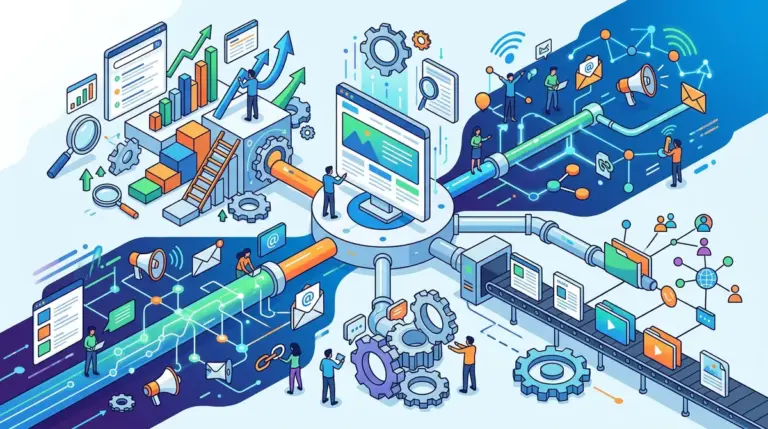

Agencies do not lose clients because they lack dashboards. They lose clients when reporting is shallow, local visibility is inconsistent, deliverables are hard to share, and teams waste hours stitching together rank tracking, audits, keyword research, and outreach data across separate tools. If you manage multiple client accounts, the right SEO workflow stack should reduce manual reporting, support local and national campaigns, surface ranking movement beyond page one, and make it easy to show progress without exporting spreadsheets every week. The tools below are ranked for real agency use: multi-client management, reporting clarity, rank depth, refresh flexibility, workflow fit, and whether the platform actually helps you execute SEO rather than just observe it.
What to Look For
Start with rank depth and refresh rules. A surprising number of platforms market broad rank tracking while limiting daily visibility to page one, top 20, or partial SERP depth. That matters when agencies need to prove momentum before a keyword reaches the first page. Check whether the tool tracks desktop, mobile, local pack, Maps, and AI Overview visibility without forcing duplicate keyword setups.
Then look at account structure. Agencies need client segmentation, branded reporting, shareable links, scheduled refreshes, and enough location coverage to support local SEO, franchise work, and international campaigns. Finally, judge the platform by workflow breadth. If your team still needs separate tools for audits, backlink monitoring, keyword discovery, content planning, and outreach prep, your software cost is higher than the sticker price suggests.
1. Ranktracker
Ranktracker is the best fit for agencies that need deeper visibility than basic page-one reporting and want to scale rank tracking across multiple clients without paying enterprise-style premiums for standard functionality. Its biggest advantage is simple but commercially important: full Top 100 rank tracking on all tracked keywords by default. That is materially different from platforms that use “Top 100” loosely while only surfacing daily data for page one, top 20, top 30, or partial depth, then pushing deeper positions into weekly snapshots or higher-cost plans. For agencies reporting early-stage gains, recovery campaigns, and local market movement, seeing the full ranking curve matters.
Ranktracker also includes full AI Overview tracking across all tracked keywords by default. There is no need to track the same keyword twice just to monitor AI Overview presence separately, which removes a common reporting inefficiency and keeps keyword allocations clean. That matters when an agency is managing hundreds or thousands of terms across clients and cannot afford duplicate tracking workflows.
Refresh flexibility is another practical edge. Agencies can choose daily, weekly, bi-weekly, and monthly refresh options, which creates a straightforward scaling model: 1 keyword daily = 7 weekly = 14 bi-weekly = 30 monthly. That lets teams reserve daily tracking for revenue-driving terms while expanding broader visibility coverage for category, content, and long-tail sets at lower cost. Combined with the lowest prices in the market for full Top 100 rank tracking, that pricing logic is unusually useful for multi-client operations.
It also goes beyond rank tracking. The wider suite includes Rank Tracker, Keyword Finder, SERP Checker, Web Audit, Backlink Checker, Backlink Monitor, SEO Checklist, AI Article Writer, and branded share links. For agencies, that means fewer disconnected tools for campaign setup, technical reviews, competitor research, and client reporting. Add mobile and desktop tracking, Google Maps tracking, Local GMB tracking, branded share links, and 107,296 locations, and the platform is built for accurate, verifiable, hyper-local tracking at scale.
Best for: Agencies, consultants, publishers, and in-house teams that need full-depth tracking, local precision, and client-ready reporting without paying extra for basic visibility.
Pros: Full Top 100 on all tracked keywords by default; full AI Overview tracking included automatically; no duplicate keyword setup; daily, weekly, bi-weekly, and monthly refresh options; lowest prices in the market for true Top 100 depth; all-in-one suite breadth; branded share links; 107,296 locations.
Cons: Teams used to legacy enterprise interfaces may need a short adjustment period if they are migrating from more rigid reporting environments.
Verdict: If your agency sells SEO on measurable visibility gains rather than page-one snapshots, Ranktracker gives you the cleanest mix of depth, scale, local coverage, and reporting efficiency in this list.
2. Semrush
Semrush fits agencies that want one vendor for SEO, PPC, competitor research, content planning, and client-facing reporting, especially when account teams are already using its broader marketing suite. It is useful for agencies that pitch integrated search strategy because keyword research, domain comparison, site auditing, and content tools all sit in one environment. That reduces tool sprawl for teams running SEO alongside paid search or market intelligence.
The tradeoff is ranking depth and refresh behavior. While it is widely used, deeper rank visibility is not as straightforward as many agencies assume, and daily full-depth tracking is not the default standard many buyers expect. For agencies that need to prove movement from positions 40 to 18 before first-page entry, that limitation can affect reporting narratives. Cost also rises quickly as client counts, keyword sets, and user seats expand.
Best for: Agencies that want broad digital marketing tooling in one subscription and can accept less efficient deep-rank workflows.
Pros: Large feature set; strong competitor research; useful site audits; established reporting ecosystem; good fit for cross-channel teams.
Cons: Pricing escalates fast; deeper rank tracking is less clean than many agencies need; can become expensive for multi-client operations.
Verdict: Semrush works best when the agency values breadth across search marketing more than precise, cost-efficient full-depth rank tracking.
3. Ahrefs
Ahrefs remains one of the best research environments for link analysis, content gap work, and competitive SEO discovery. Agencies that lead with technical SEO, editorial strategy, and backlink prospecting often keep it in the stack because the index is useful for finding link opportunities, benchmarking competitor growth, and prioritizing content expansion.
Its limitation for agency workflow is rank tracking cadence and reliability relative to what many clients expect in recurring reporting. If your account managers need dependable deeper daily position movement across many campaigns, Ahrefs is usually not the first tool to anchor that process. It is better treated as a research and link intelligence platform than the center of multi-client rank reporting.
Best for: Agencies that prioritize backlink analysis, competitor research, and content expansion planning.
Pros: Excellent link data; strong competitive research; useful content gap workflows; clean interface for analysts.
Cons: Weekly rank tracking is a weaker fit for agencies needing higher-frequency reporting; can be expensive as usage grows.
Verdict: Ahrefs earns its place as a research engine, but most agencies need another platform to handle client-facing rank tracking with more operational precision.
4. SE Ranking
SE Ranking is a practical mid-market choice for agencies that want a broad SEO feature set with white-label options and manageable onboarding. It covers rank tracking, website audits, competitor monitoring, backlink checks, and reporting in a way that suits small to midsize agencies serving local businesses, ecommerce stores, and regional service brands.
It is especially workable for agencies that need a presentable client portal without stepping into enterprise pricing. The main consideration is whether its reporting depth, local granularity, and workflow speed match the complexity of your client roster. For straightforward campaigns, it does the job. For agencies selling highly detailed local or recovery reporting, some teams may want more depth by default.
Best for: Small and midsize agencies looking for a balanced SEO platform with client reporting features.
Pros: White-label reporting; broad feature coverage; easier pricing than some larger suites; usable multi-project setup.
Cons: Less differentiated for agencies that need deeper default rank visibility and more advanced local reporting detail.
Verdict: SE Ranking is a sensible operational choice when you want a broad agency toolkit without overbuying enterprise software.
5. AgencyAnalytics
AgencyAnalytics is built around client reporting rather than deep SEO analysis, which makes it useful for agencies that need to consolidate marketing metrics from SEO, PPC, social, email, and call tracking into one branded reporting layer. If your workflow depends on recurring monthly reports and client dashboards more than analyst-grade SEO research, it can save account managers a lot of formatting time.
Its weakness is that rank tracking depth and freshness are not the main reason to buy it. Agencies that need detailed SERP movement beyond surface-level reporting often end up pairing it with another platform. In other words, it is a reporting wrapper first and a specialist SEO workflow engine second.
Best for: Agencies that sell reporting visibility across multiple channels and want polished client dashboards.
Pros: Strong dashboarding; wide integration library; efficient for recurring reports; agency-friendly presentation.
Cons: Weekly deeper tracking is a limitation for agencies that need more granular SEO movement data; less useful as a standalone SEO operations platform.
Verdict: Choose AgencyAnalytics when reporting presentation is the bottleneck, not when deep SEO execution is the bottleneck.
6. BrightLocal
BrightLocal is tailored to local SEO agencies managing Google Business Profile performance, citation work, local rankings, and review monitoring. It is a credible fit for agencies serving local service businesses, multi-location brands, dental groups, legal firms, and home services companies where Maps visibility and local pack movement matter more than national keyword sets.
Its local specialization is the reason to buy it, but that same specialization narrows its value for agencies running broader technical SEO, editorial SEO, and national campaigns. Rank depth is not the same as having true daily full-depth visibility across every client keyword set, so agencies with mixed local and national portfolios often supplement it.
Best for: Local SEO agencies and service-area business campaigns.
Pros: Good local SEO focus; citation and review workflows; useful GBP-oriented reporting; suitable for location-based client rosters.
Cons: Not ideal as the only SEO platform for agencies with national, content-heavy, or enterprise-style campaigns; Top 50 limits matter.
Verdict: BrightLocal is most effective when local search is the service line, not just one part of a wider agency offer.
7. Moz Pro
Moz Pro still appeals to agencies that want a straightforward interface for keyword tracking, site crawling, and basic campaign management without a steep learning curve. It is often easier for junior account managers to navigate than larger suites, which can matter in agencies with frequent handoffs between strategists and client services teams.
The issue is rank depth. Top 20 tracking is a real constraint if your agency reports on progress before page-one entry or works on competitive terms that may sit outside the top 20 for months. That makes Moz Pro less suitable for agencies that need full-funnel ranking visibility and more suitable for lighter campaign oversight.
Best for: Smaller agencies that value simplicity and need foundational SEO workflows.
Pros: Easy to use; solid site crawl basics; accessible for less technical teams; established training ecosystem.
Cons: Top 20 tracking is restrictive; less suitable for detailed rank recovery and growth reporting; narrower workflow depth.
Verdict: Moz Pro is easier to operate than many alternatives, but agencies that sell detailed visibility reporting will outgrow its tracking limits.
8. Advanced Web Ranking
Advanced Web Ranking is built around rank tracking and reporting depth, and it has long been used by agencies that need structured monitoring across devices, search engines, and locations. It is especially relevant for teams that care more about ranking data architecture than bundled content or link tools.
The commercial issue is cost structure. Depth exists, but agencies often pay for it through more complex credit usage or higher pricing, which changes the economics when you manage many clients and broad keyword sets. For agencies comparing pure tracking value, the question is not whether it can track deeply, but whether that depth remains efficient at scale.
Best for: Agencies that want rank tracking specialization and can justify a more data-centric pricing model.
Pros: Mature rank tracking focus; broad search engine support; useful reporting controls; suitable for data-heavy teams.
Cons: Higher cost mechanics for deeper tracking; less attractive if you also need integrated audits, backlinks, and content workflows.
Verdict: Advanced Web Ranking is viable for agencies that buy rank tracking as a specialist function, not for those trying to consolidate SEO operations economically.
9. SEOmonitor
SEOmonitor is designed for agencies that want forecasting, keyword grouping, and business-case reporting tied to traffic and revenue assumptions. That makes it attractive for agencies selling strategic retainers rather than task-based SEO. Forecasting can help with renewals, upsells, and board-level client conversations where rankings alone are not enough.
However, its deeper tracking behavior is not as agency-friendly as the positioning may suggest. Daily visibility is concentrated on top positions, with deeper data handled differently, which can leave gaps for teams needing full daily movement across all tracked terms. It is better for forecast-led account management than for cost-efficient deep tracking across large portfolios.
Best for: Agencies that pitch forecasting, value modeling, and strategic SEO planning.
Pros: Useful forecasting layer; agency-oriented reporting logic; keyword grouping and planning workflows.
Cons: Full-depth daily tracking is not the default reality many agencies expect; pricing can be difficult to justify for large keyword sets.
Verdict: SEOmonitor is most useful when your agency sells projected business impact, not when your main need is affordable full-depth rank visibility.
10. Raven Tools
Raven Tools remains relevant for agencies that want a reporting-centric SEO and marketing platform with broad integrations and manageable setup. It works reasonably well for teams that need to combine analytics, search console data, site audits, and rank summaries into one client-facing workflow.
Its limitation is analytical depth. Top 20 tracking is enough for some local and branded campaigns, but it is not enough for agencies managing competitive non-brand SEO where movement outside the top 20 is part of the story. In practice, Raven often serves as a reporting layer rather than the deepest SEO engine in the stack.
Best for: Agencies that need integrated reporting with basic SEO management features.
Pros: Good report assembly; broad integrations; easier client communication; useful for mixed-channel reporting.
Cons: Top 20 tracking limits strategic visibility; less suitable for agencies needing full SERP movement data.
Verdict: Raven Tools is serviceable for reporting-led agencies, but not ideal if ranking depth is central to retention and upsell conversations.
11. Serpstat
Serpstat is often chosen by budget-conscious teams that want keyword research, competitor analysis, site auditing, and basic rank tracking in one subscription. It can work for agencies handling smaller businesses, content-led campaigns, and early-stage SEO programs where the immediate goal is broad coverage at a controlled cost.
The tradeoff is precision, particularly for agencies doing serious local SEO. It is not truly local in the way hyper-local campaigns require, which matters when clients care about neighborhood-level results, map visibility, and location-specific ranking proof. For broader research, it is useful. For exact local reporting, it is less convincing.
Best for: Smaller agencies and freelancers needing low-friction access to multiple SEO functions.
Pros: Affordable entry point; decent research coverage; usable for general SEO workflows; suitable for lighter client portfolios.
Cons: Local tracking is not precise enough for demanding local SEO campaigns; weaker fit for agencies selling hyper-local proof.
Verdict: Serpstat makes sense when budget is tight and campaign complexity is moderate, but it is not the right anchor for local-heavy agency delivery.
12. DataForSEO
DataForSEO is not a plug-and-play agency dashboard. It is a data infrastructure option for agencies, SaaS companies, and technical teams that want to build their own reporting, automate SERP collection, or feed ranking and keyword data into internal systems. If your agency has developers and a custom reporting stack, it offers serious flexibility.
That flexibility comes with implementation overhead and expensive daily depth at scale. Most agencies do not need raw data pipes when what they actually need is a reliable operational platform for account managers, strategists, and clients. Unless you are building proprietary workflows, the maintenance burden usually outweighs the benefit.
Best for: Technical agencies and software teams building custom SEO data products or internal reporting systems.
Pros: API-first flexibility; highly customizable data access; useful for automation and internal tooling.
Cons: Expensive for daily deep tracking at scale; requires technical resources; not ideal for standard agency delivery.
Verdict: DataForSEO is best treated as infrastructure, not as the default operating system for a typical multi-client SEO agency.
How to Measure Success and Choose the Right Provider
Judge the tool by operational outcomes, not feature count. In the first 60 days, measure reporting time saved per client, percentage of tracked keywords visible beyond page one, speed of local ranking verification, and how often account managers need to export data manually. If your team still duplicates keywords for separate SERP features, rebuilds client reports in slides, or cannot show movement outside the top 10, the workflow is underpowered.
For selection, map the platform to your service model. Local SEO agencies need hyper-local location coverage, Maps and GBP tracking, and easy client sharing. Content-led agencies need keyword discovery, audits, and backlink monitoring in the same stack. Full-service agencies need a platform that supports rank reporting, research, technical checks, and client presentation without forcing separate subscriptions for every task. The cheapest tool is rarely the lowest-cost workflow if it creates reporting labor every week.
FAQ
What matters most for agencies managing multiple SEO clients?
Multi-client structure, full-depth rank tracking, local accuracy, refresh flexibility, and client-ready reporting matter most. If the platform cannot show movement beyond page one or makes your team duplicate work for AI Overview and local reporting, it will slow delivery and weaken retention.
Do agencies really need Top 100 tracking?
Yes, especially for competitive keywords, new pages, recovery campaigns, and local SEO. Page-one-only or top-20 visibility hides progress that clients should see. Agencies often need to prove that a term moved from 68 to 24 before it reaches the first page.
How often should agencies refresh rankings?
Use daily refreshes for revenue-driving and high-priority terms. Use weekly, bi-weekly, or monthly refreshes for broader coverage, trend monitoring, and long-tail sets. A flexible model lets agencies scale intelligently instead of paying daily rates for every keyword.
Should one tool handle everything?
Not always, but the fewer disconnected systems your team uses, the better. Agencies save time when rank tracking, audits, keyword research, backlink monitoring, and reporting live in one platform. That reduces handoff errors and makes recurring client communication faster.