
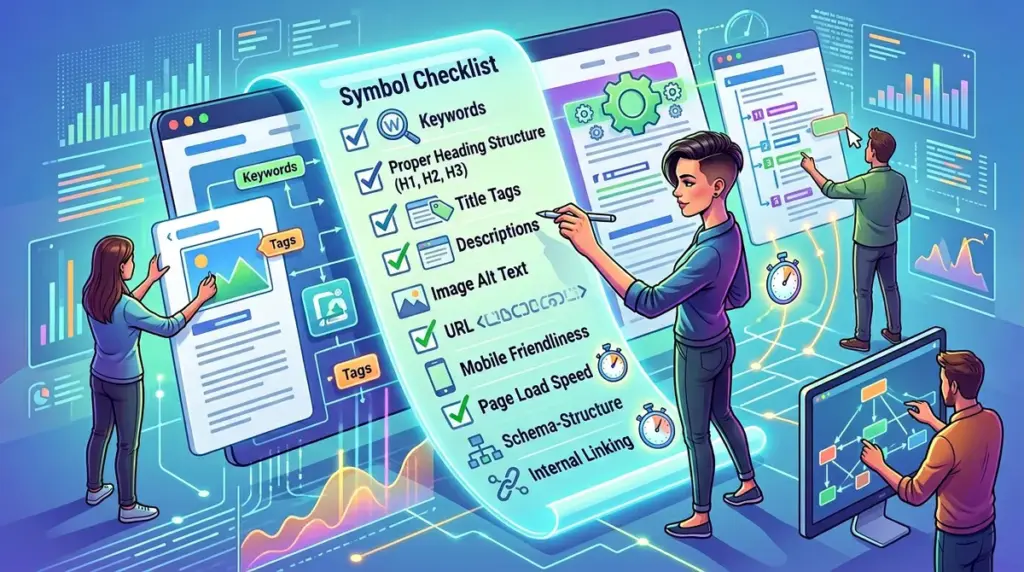
On-page SEO in the current search landscape has shifted from simple keyword placement to a sophisticated exercise in entity relationship management and user intent satisfaction. Modern search engines no longer just look for strings of text; they look for topical authority and semantic relevance. For agencies and site owners, an optimized page is the difference between a high-bounce vanity metric and a high-converting asset that sustains its position against algorithmic volatility. This checklist focuses on the high-impact variables that dictate how crawlers interpret your data and how users interact with your interface.
Strategic URL and Metadata Configuration
The URL is the first signal a crawler receives about a page’s hierarchy. A modern URL structure must be descriptive, flat, and devoid of unnecessary parameters. Long, convoluted paths dilute keyword prominence and make it harder for users to trust the link in a social or messaging context.
Best for: Improving crawl efficiency and user trust.
Metadata remains the primary driver of Click-Through Rate (CTR). While Google frequently rewrites meta descriptions, providing a high-quality, 155-character summary acts as a fallback that can influence the search snippet. Title tags should prioritize the primary keyword toward the beginning of the string to leverage "front-loading" benefits, staying within the 50-60 character limit to prevent truncation on mobile devices.
Header Hierarchy and Semantic HTML
Headers (H2, H3, H4) are not design elements; they are the skeletal structure of your content. A single H1 (usually the page title) should define the primary topic, while subsequent H2s should cover the main sub-topics. This hierarchy allows search engines to understand the relationship between different sections of the text.
- H2 Tags: Use these for the main pillars of your argument or tutorial steps.
- H3 Tags: Use these for granular details or lists within an H2 section.
- Semantic Tags: Utilize <article>, <section>, and <aside> to help crawlers distinguish between core content and sidebar noise.
Content Depth and Entity Optimization
Modern on-page SEO requires moving beyond "keyword density" toward "topical coverage." If you are writing about "commercial real estate," your content should naturally include related entities like "zoning laws," "lease agreements," and "property management." Search engines use these clusters to verify the expertise and depth of the content.
Best for: Ranking for long-tail queries and building topical authority.
Content must be structured for "skimmability." Large blocks of text are a signal of poor user experience, leading to higher bounce rates. Use short paragraphs, bulleted lists, and bolded key terms to guide the reader’s eye. This structure also makes it easier for Google to pull "Featured Snippets" from your content, as the algorithm can easily identify a direct answer within a structured list or a concise paragraph.
Pro Tip: Use the "Search Console Gap Analysis" method. Look at the queries your page is currently ranking for in positions 11-20. Integrate those specific terms into your H3 headings or a new FAQ section to push the page into the top 10 for those secondary keywords.
Internal Linking and Information Architecture
Internal links are the circulatory system of your website. They distribute "link equity" (PageRank) from high-authority pages to newer or deeper content. A modern on-page strategy uses descriptive anchor text—avoiding "click here" or "read more"—to tell the crawler exactly what the destination page is about.
Best for: Reducing bounce rates and increasing "crawl depth."
Implement a "Hub and Spoke" model. Your main pillar pages should link out to detailed sub-topic articles, and those sub-topic articles should link back to the pillar. This creates a closed loop of relevance that signals to search engines that your site is a definitive resource on the subject. Ensure that every page is no more than three clicks away from the homepage to maintain a shallow, efficient architecture.
Technical On-Page Elements and Rich Snippets
Technical SEO and on-page SEO overlap significantly at the page level. Beyond content, the underlying code must facilitate speed and clarity. This includes optimizing images by using the WebP format, which offers superior compression without losing quality, and ensuring every image has a descriptive ALT tag for accessibility and image search indexing.
Schema Markup (JSON-LD)
Schema is the "secret language" of search engines. By implementing JSON-LD structured data, you provide explicit clues about the meaning of a page. Whether it is Article, Product, FAQ, or Review schema, this code enables "rich results" like star ratings or dropdown questions in the SERPs, which significantly improves CTR compared to "flat" blue links.
Core Web Vitals and Interaction
While often categorized as technical, Largest Contentful Paint (LCP) and Cumulative Layout Shift (CLS) are deeply tied to on-page elements. Avoid heavy third-party scripts that block the main thread and ensure that all media elements have defined dimensions to prevent layout jumps during loading. A stable, fast-loading page is a prerequisite for maintaining high rankings in competitive niches.
Executing the On-Page Audit
Optimization is not a one-time event but a cycle of refinement. Start by identifying your "money pages"—those with high conversion potential but stagnant rankings. Apply the structural changes first (headers and metadata), then move into content enrichment by adding entities and internal links. Finally, validate your changes using the URL Inspection tool in Google Search Console to request a re-crawl. Monitor your performance over a 30-day window, paying close attention to changes in average position and CTR. If a page remains stagnant, revisit the intent; you may be providing an informational answer to a transactional query.
On-Page SEO FAQ
How long should an optimized blog post be?
There is no "magic" word count. Length should be determined by the complexity of the topic and the depth of the competing pages in the top 10. Focus on being the most comprehensive resource, whether that takes 800 words or 2,500.
Does the keyword need to be in the first paragraph?
Yes, ideally within the first 100 words. This confirms the page's relevance to both the crawler and the user immediately upon landing, reducing the likelihood of a bounce.
Can I use multiple H1 tags on a single page?
While HTML5 allows it, it is not recommended for SEO. A single H1 provides a clear, primary signal of the page’s topic. Using multiple H1s can dilute this signal and confuse the hierarchy for search engines.
How often should I update on-page content?
Review high-traffic pages every 6 to 12 months. Updating statistics, adding new internal links, and refining the meta description to reflect current search trends can provide a significant "freshness" boost in rankings.